There are no items in your cart
Add More
Add More
| Item Details | Price | ||
|---|---|---|---|
{{DATE}}
“What does fairness feel like to you?”
One child said, “When someone lets me speak.”
Another whispered, “When no one laughs at my mistakes.”
A third added, “When the teacher listens to both sides in a fight.”
None of them spoke about articles, rights, or duties.
Yet, unknowingly, they described the heart of our Constitution: justice, equality, dignity.
And that’s when you realise something powerful:
Children already understand constitutional values.
They just need the right environment to live in.
This is where classrooms become the first place where a child learns what it means to be a citizen.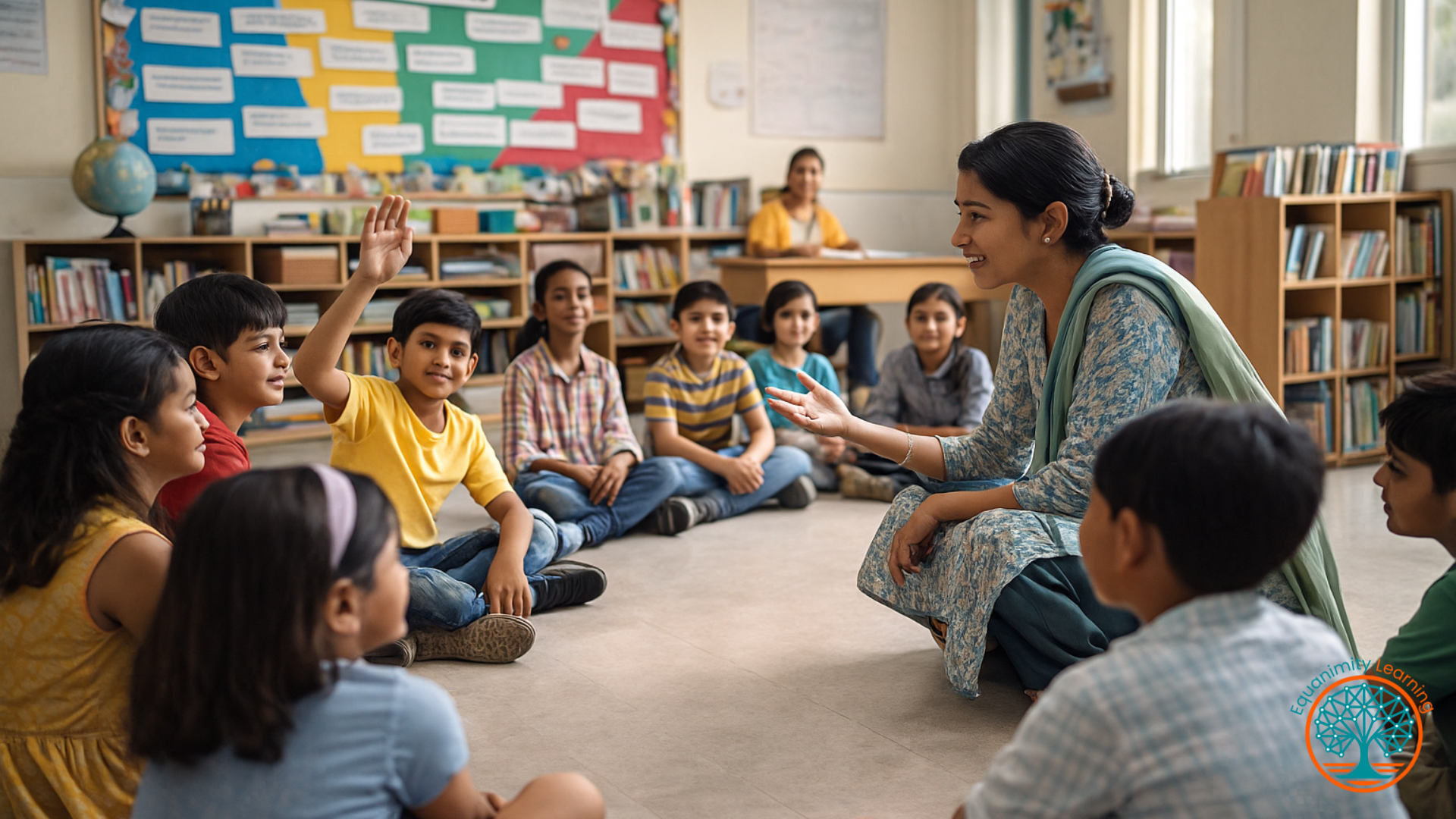
It doesn’t start when they memorise the Preamble.
It begins the moment they discover:
A school we worked with once tried something incredibly simple.
Every morning, before rushing into lessons, they held a 5-minute circle.
No big speeches.
No complicated activities.
Just children sitting together, answering one small question:
“What is one thing you want for our class today?”
The answers surprised everyone.
“More kindness.”
“More listening.”
“Less shouting.”
“Help each other in maths.”
“Make the new student feel included.”
Within a month, fights reduced.
Group work improved.
The class became more trusting.
Not because of discipline.
Not because of rules.
But because the children built their own understanding of what fairness and dignity felt like.
You don’t need grand tools to build constitutional values.
You just need consistent everyday rituals that show children:
Here, everyone matters.
If you want to take it a step further, here’s a simple practice many teachers love:
Students learn negotiation, accountability, and cooperation… without a single chapter being taught.
You don’t have to teach this formally.
Just ask questions when real situations arise.
If two students argue:
“Both of you have the right to speak. How can we make sure each of you feels heard?”
If someone feels left out:
“What does equality look like at this moment?”
If a child interrupts others:
“You have the right to share your ideas. What is your duty when someone else is speaking?”
These small conversations silently teach more constitutional values than memorised lines ever will.
Another school once tried a small ritual:
Every Friday, one child taught the class a greeting from their mother tongue.
Vanakkam.
Adaab.
Pranam.
Sat Sri Akal.
Kem Cho.
Nomoshkar.
A little later, a teacher chimed in with a playful remark…
“My students learned more about India in these 2-minute greetings than they ever did in geography.”
When children grow up comfortable with differences,
they grow up believing that diversity is strength not separation.
Whether you speak about the Constitution or not, children watch you:
How you listen.
How you stay calm.
How you treat the quiet ones.
How you apologise when you make a mistake.
How you stop fights, not with fear, but with fairness.
A teacher modelling respect is more powerful than a hundred moral science chapters.
You are the Constitution in motion.
Many teachers tell us,
“I want to build this kind of classroom culture… but where do I start?”
That’s why our Classroom Management online course exists.
It gives you simple routines, structures, and tools that make your classroom calmer, kinder, more respectful.
It doesn’t add work.
It makes what you already do easier.
Building constitutional values is not about teaching big ideas.
It’s about shaping small behaviours.
A moment of listening.
A shared responsibility.
A gentle reflection.
A democratic choice.
An inclusive greeting.
These 1% actions, done consistently, create children who grow up respectful, responsible, and compassionate, the kind of citizens our country quietly depends on.
Because when classroom culture grows 1% better every day,
children don’t just learn the Constitution, they learn to live it.
You can explore our courses on www.eqanimitylearning.com.
{{AUTHOR}}
Transforming Education, One Step at a time.
 Launch your Graphy