Action plans matter.
They bring structure, direction, and momentum to school improvement.
But in schools, improvement is often equated only with movement.
New initiatives.
New formats.
New monitoring systems.Yet many school leaders quietly wonder:
“Why does so much effort still lead to the same outcomes?”
The answer rarely sits in what schools are doing.
It sits in how leaders are seeing.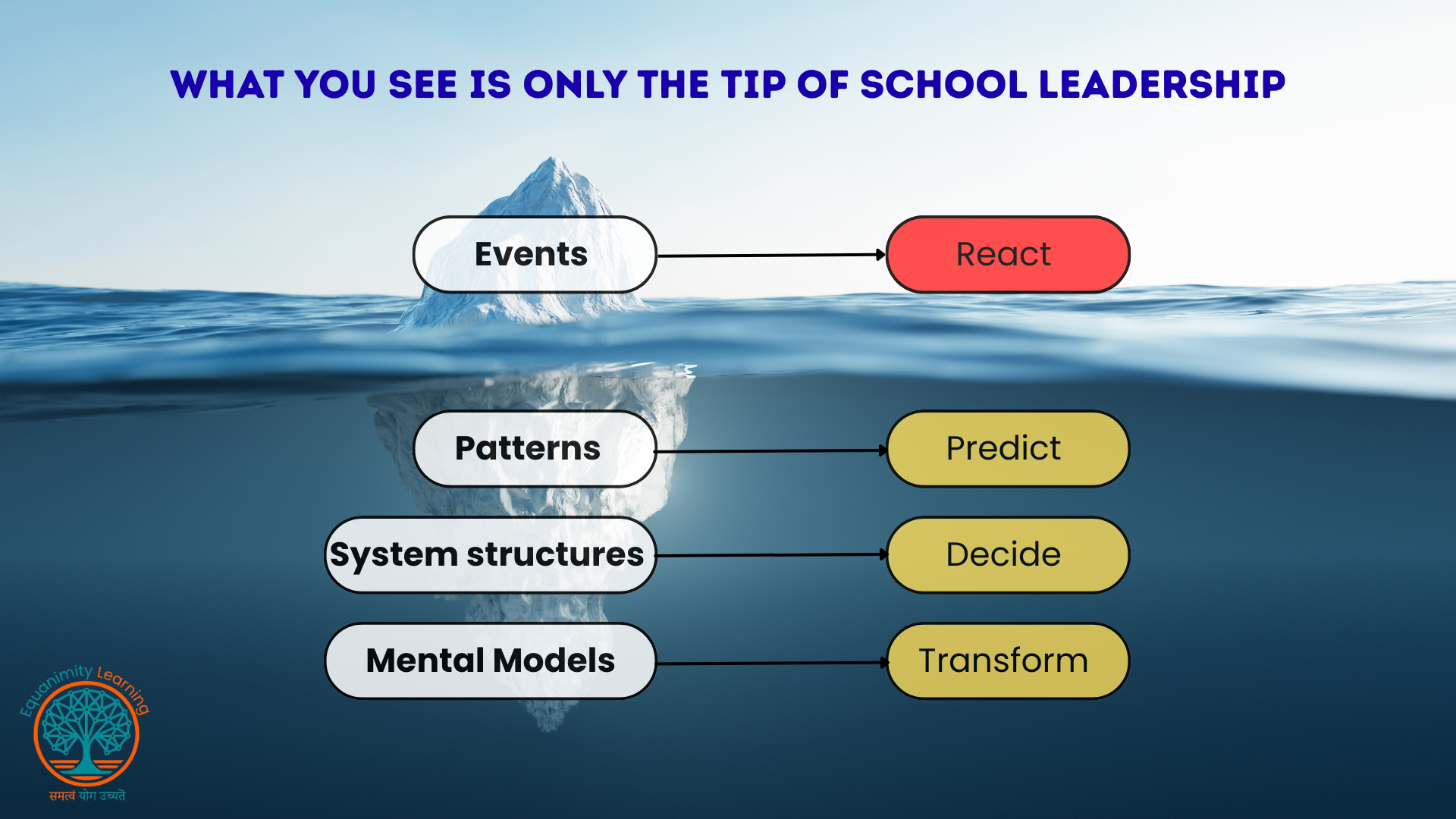
The Lens Beneath School LeadershipEvery decision in a school passes through an invisible lens.
That lens is shaped by:- Assumptions about teachers.
- Beliefs about students.
- Stories we hold about parents.
- Personal definitions of control, accountability, and success.
These lenses quietly determine:- What leaders notice.
- What they overlook.
- What feels “reasonable”.
- What feels “impossible”.
Because these lenses operate beneath awareness, they are rarely questioned yet they shape almost everything.
A School Story with Commitment but Unseen Consequences A leadership team believes:“If we don’t closely monitor, standards will drop.
”Acting with commitment, they:- Increase observations.
- Add documentation.
- Track every deviation.
At first, compliance improves. But over time:- Creativity fades.
- Trust weakens.
- Teachers begin to “perform” rather than experiment.
Eventually, leadership concludes:“ They lack ownership.”
What Schools Often Miss Is the Loop
Beliefs shape systems and systems quietly reinforce those same beliefs.
This isn’t resistance.
It’s a predictable outcome of an unseen lens.
Mental Models: The Deepest Layer of School Life Mental models are the beliefs and assumptions that sit beneath behaviour, systems, and outcomes.
In schools, they often sound like:- “Teachers won’t take ownership unless monitored.”
- “Students today lack discipline.”
- “Parents don’t understand education.”
- “If I don’t control things, standards will fall.”
These beliefs:- Design the systems.
- Reinforce recurring patterns.
- Produce the visible events.
Yet they are rarely named or examined.
The Most Powerful Shift a School Leader Can Make True leadership growth does not start with doing more.
It starts with seeing differently.
Three quiet but courageous shifts matter:
1. From fixing behaviour to checking the story we are telling ourselvesInstead of asking, “Why aren’t they changing?” leaders pause and ask: “What belief or story am I holding that is shaping how I’m responding right now?”
2. From certainty to curiosityStrong leadership is not louder advocacy it is deeper inquiry:- What might I be assuming as fact?
- What perspective am I missing?
- If this belief were untrue, what else becomes possible?
3. From urgency to awarenessWhen leaders slow down their thinking, schools speed up their learning.
Because sustainable change never outpaces understanding.
A Leadership PauseBefore the next initiative, pause and ask:
- What do I deeply believe about my teachers?
- What assumptions guide our discipline systems?
- Which “truth” in this school has never been questioned?
Not to weaken leadership.
But to strengthen it.Because when the lens becomes visible, it becomes adjustable.
Closing ReflectionReal change doesn’t begin with only action plans.
It begins when leaders become aware of the lens through which they lead.When that awareness grows even by 1% schools begin to move:- from effort to effectiveness.
- from control to coherence.
- from activity to alignment.
Source of inspiration: systems thinking work on mental models, adapted thoughtfully to the everyday realities of schools and school leadership.


 Launch your Graphy